 TrakMac
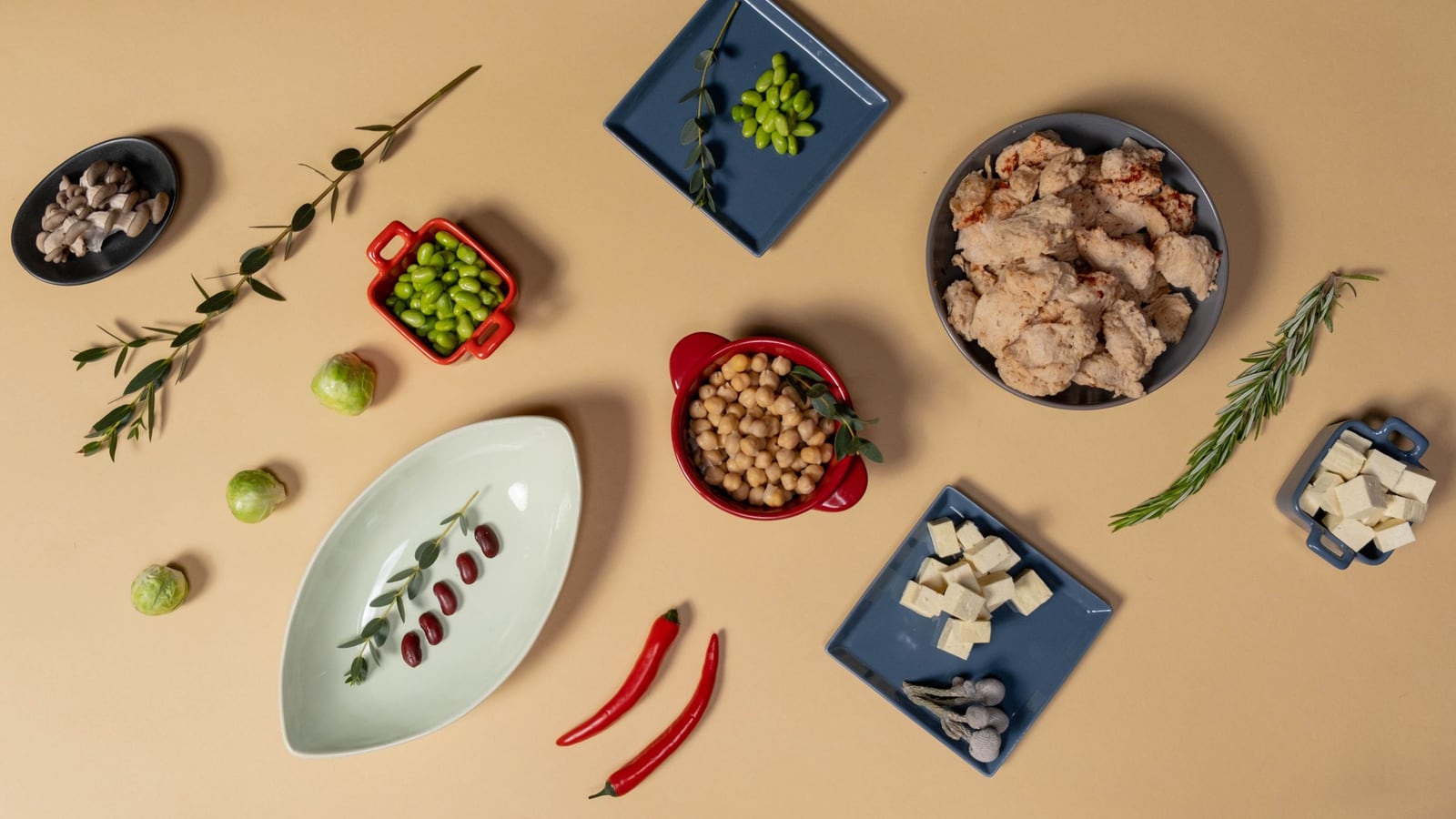
What vegan food has the most protein per calorie?
Seitan has the most protein per calorie of any common vegan food: a 1/3 cup (85g) serving of Westsoy cubed seitan lists 21g of protein for 120 calories, which works out to 17.5g of protein per 100 calories, per its label in USDA FoodData Central. Nutritional yeast comes next at 13.3g per 100 calories (8g in 1/4 cup), then cooked lupini beans at 13.1g (13g per 1/2 cup), with firm and extra firm tofu tied at 12.0g (firm tofu has 22g per 1/2 cup). Unsweetened pea milk, tempeh, cooked soybeans and edamame land between 9.8g and 11.5g per 100 calories. Beans and lentils sit around 5g to 8g per 100 calories and bring fiber with them. Nuts, seeds, peanut butter, quinoa and oats are the least efficient vegan protein sources at under 6g per 100 calories, because most of their calories come from fat or starch.
Every vegan protein source ranked by protein per 100 calories
| Rank | Food | Serving | Calories | Protein (g) | Carbs (g) | Fat (g) | Protein per 100 cal | FDC ID |
|---|---|---|---|---|---|---|---|---|
| 1 | Seitan (Westsoy, cubed) | 1/3 cup (85g) | 120 | 21 | 5 | 2 | 17.5 | 2012995 |
| 2 | Nutritional yeast (Bob's Red Mill) | 1/4 cup (15g) | 60 | 8 | 5 | 0.5 | 13.3 | 2596118 |
| 3 | Lupini beans, cooked | 1/2 cup (83g) | 99 | 13 | 8 | 2.4 | 13.1 | 172424 |
| 4 | Tofu, firm | 1/2 cup (126g) | 181 | 22 | 4 | 11 | 12 | 172475 |
| 5 | Tofu, extra firm | 1/5 block (91g) | 76 | 9 | 1 | 4.8 | 12 | 174290 |
| 6 | Pea milk, unsweetened (Ripple) | 1 cup (240ml) | 70 | 8 | 0 | 4.5 | 11.5 | 1945193 |
| 7 | Tempeh | 1/2 cup (83g) | 159 | 17 | 6 | 9 | 10.6 | 174272 |
| 8 | Soybeans, cooked | 1/2 cup (86g) | 148 | 16 | 7 | 7.7 | 10.6 | 174271 |
| 9 | Tofu, regular (soft) | 1/2 cup (124g) | 94 | 10 | 2 | 5.9 | 10.6 | 172476 |
| 10 | Edamame, shelled, cooked | 1/2 cup (78g) | 94 | 9 | 7 | 4 | 9.8 | 168411 |
| 11 | Soy milk, unsweetened | 1 cup (243g) | 80 | 7 | 4 | 3.9 | 8.7 | 175215 |
| 12 | Lentils, cooked | 1/2 cup (99g) | 115 | 9 | 20 | 0.4 | 7.8 | 172421 |
| 13 | Split peas, cooked | 1/2 cup (98g) | 116 | 8 | 21 | 0.4 | 7.1 | 172429 |
| 14 | White beans, cooked | 1/2 cup (90g) | 124 | 9 | 22 | 0.3 | 7 | 175203 |
| 15 | Kidney beans, cooked | 1/2 cup (89g) | 112 | 8 | 20 | 0.4 | 6.8 | 173740 |
| 16 | Black beans, cooked | 1/2 cup (86g) | 114 | 8 | 20 | 0.5 | 6.7 | 173735 |
| 17 | Green peas, cooked | 1/2 cup (80g) | 62 | 4 | 11 | 0.2 | 6.6 | 170017 |
| 18 | Pinto beans, cooked | 1/2 cup (86g) | 122 | 8 | 22 | 0.6 | 6.3 | 175200 |
| 19 | Navy beans, cooked | 1/2 cup (91g) | 127 | 7 | 24 | 0.6 | 5.9 | 173746 |
| 20 | Hemp hearts | 3 Tbsp (30g) | 166 | 9 | 3 | 14.6 | 5.7 | 170148 |
| 21 | Chickpeas, cooked | 1/2 cup (82g) | 134 | 7 | 22 | 2.1 | 5.4 | 173757 |
| 22 | Pumpkin seeds, roasted | 1 oz (28g) | 163 | 8 | 4 | 13.9 | 5.2 | 170557 |
| 23 | Peanuts, dry-roasted | 1 oz (28g) | 166 | 7 | 6 | 14.1 | 4.2 | 173806 |
| 24 | Quinoa, cooked | 1 cup (185g) | 222 | 8 | 39 | 3.6 | 3.7 | 168917 |
| 25 | Peanut butter, smooth | 2 Tbsp (32g) | 191 | 7 | 7 | 16.4 | 3.7 | 172470 |
| 26 | Pistachios, dry-roasted | 1 oz (28g) | 162 | 6 | 8 | 13 | 3.7 | 170185 |
| 27 | Almonds, dry-roasted | 1 oz (28g) | 170 | 6 | 6 | 14.9 | 3.5 | 170158 |
| 28 | Oats, dry | 1/2 cup (41g) | 153 | 5 | 27 | 2.6 | 3.5 | 173904 |
| 29 | Chia seeds | 1 oz (28g) | 138 | 5 | 12 | 8.7 | 3.4 | 170554 |
| 30 | Tahini | 2 Tbsp (30g) | 179 | 5 | 6 | 16.1 | 2.9 | 170189 |
Source: USDA FoodData Central, SR Legacy dataset (April 2018 release, retrieved 2026-11-04). Protein per 100 calories is calculated from USDA's unrounded per-100g values, so it can differ slightly from dividing the rounded serving numbers. Each FDC ID links to fdc.nal.usda.gov/food-details/
Which vegan foods have the most protein per serving?
Firm tofu has the most protein per normal serving: 22g in 1/2 cup (126g) for 181 calories. Seitan is close behind with 21g in 1/3 cup (85g), then tempeh at 17g per 1/2 cup and cooked soybeans at 16g per 1/2 cup. Lupini beans give 13g per 1/2 cup and hemp hearts give 9g in 3 tablespoons. Most beans and lentils give 7g to 9g per 1/2 cup cooked, so a full cup gets you to about 14g to 18g. A 1 oz handful of nuts or seeds tops out around 6g to 8g.
Best vegan protein under 100 calories
The best vegan protein under 100 calories is cooked lupini beans: 13g of protein for 99 calories in 1/2 cup. Other strong picks under 100 calories:
- Extra firm tofu: 9g of protein, 76 calories (1/5 block)
- Regular tofu: 10g of protein, 94 calories (1/2 cup)
- Edamame: 9g of protein, 94 calories (1/2 cup shelled)
- Unsweetened pea milk (Ripple): 8g of protein, 70 calories (1 cup)
- Nutritional yeast (Bob's Red Mill): 8g of protein, 60 calories (1/4 cup)
- Unsweetened soy milk: 7g of protein, 80 calories (1 cup)
How to build a 30g vegan protein meal
Pair one soy or wheat protein with one bean or seed, because the top foods on this list rarely hit 30g alone at a normal portion. Three combos built only from the table above:
- 1/2 cup firm tofu (22g) plus 1/2 cup lentils (9g): 31g of protein, 296 calories
- 1/3 cup seitan (21g) plus 1/2 cup black beans (8g) plus 1 cup unsweetened soy milk (7g): 36g of protein, 314 calories
- 1/2 cup tempeh (17g) plus 1/2 cup edamame (9g) plus 3 Tbsp hemp hearts (9g): 35g of protein, 419 calories
More on why 30g per meal is a useful target: the 30g protein per meal rule. For whole-day plant-based planning, see plant-based protein maxing.
Quick answers
Is tofu or tempeh higher in protein? Firm tofu has more protein per calorie (12.0g per 100 calories vs 10.6g for tempeh) and more per 1/2 cup (22g vs 17g), per USDA FoodData Central.
How much protein is in a cup of cooked lentils? About 18g. USDA lists 9g in 1/2 cup (99g) of cooked lentils, for 115 calories.
Is peanut butter a good source of vegan protein? It's mostly a fat source. Two tablespoons have 7g of protein and 191 calories, or 3.7g of protein per 100 calories.
Which plant milk has the most protein? Of the two here, unsweetened pea milk (Ripple) lists 8g per cup for 70 calories and unsweetened soy milk has 7g per cup for 80 calories, per USDA.
How much protein is in nutritional yeast? Bob's Red Mill Large Flake Nutritional Yeast lists 8g of protein in 1/4 cup (15g) for 60 calories.
Logging it without the homework
In TrakMac you just say what you had out loud, like "half a cup of firm tofu with a cup of quinoa and some edamame," and it logs the calories, protein, carbs and fat for you. No searching a database, no guessing at portions. You can also ask the TrakMac Coach whether it fits the rest of your day, and it answers using your own logs.
These are close-enough numbers for everyday tracking, not medical or dietary advice. Brands can change recipes, so check the label you're holding.