 TrakMac
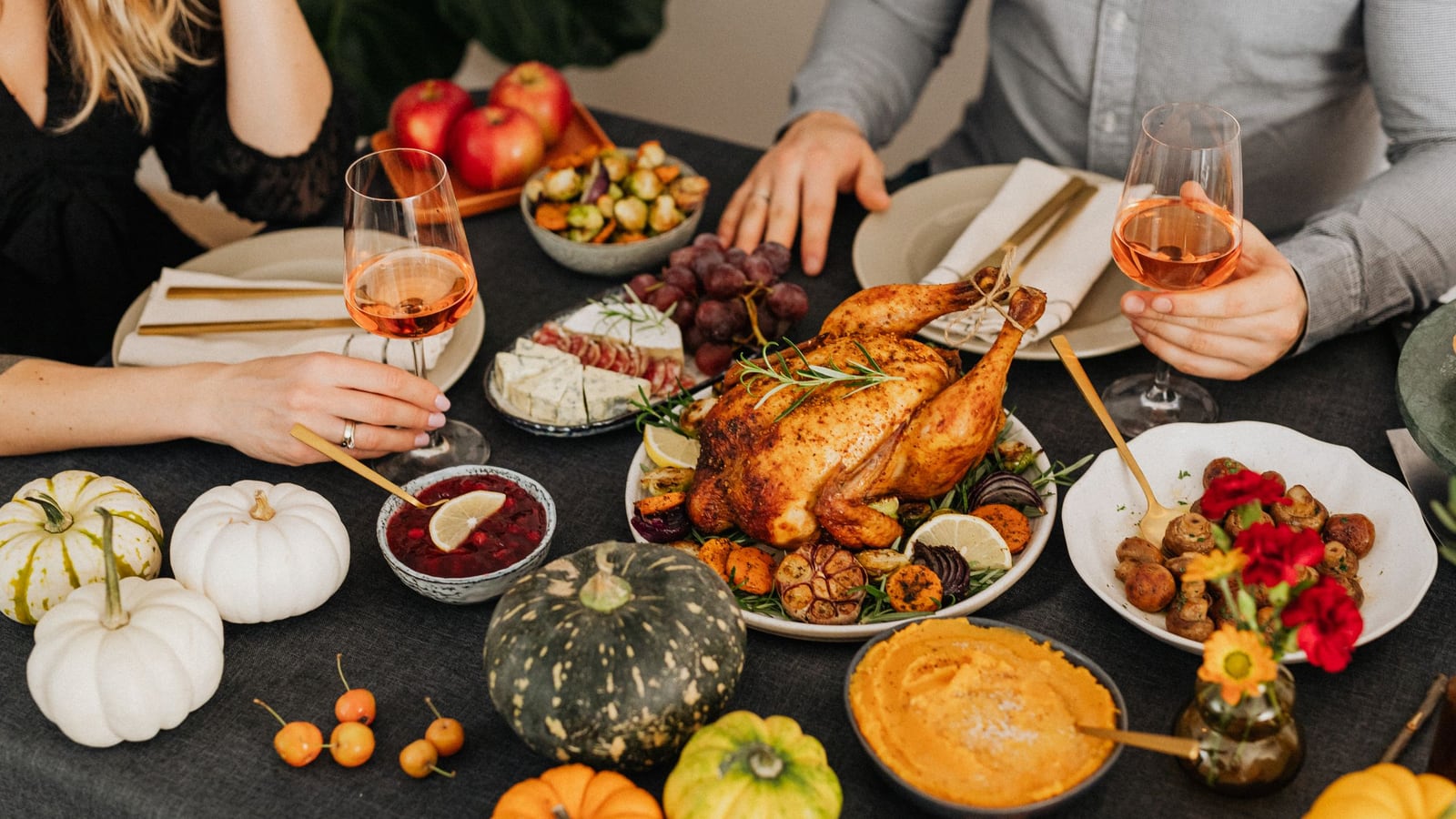
How many calories and how much protein are in Thanksgiving dinner?
A typical Thanksgiving plate (3 oz of white-meat turkey, stuffing, mashed potatoes, gravy, green bean casserole, sweet potato casserole, cranberry sauce and a dinner roll) comes to about 886 calories and 39g of protein, using USDA FoodData Central numbers for each dish. Add a slice of pumpkin pie (374 calories) and the meal lands near 1,260 calories. Turkey does most of the protein work: 3 oz of white meat has 24g of protein for 118 calories, and dark meat has 23g for 142 calories. Ham is close behind at 17g per thick slice. The sides are mostly carbs and fat, which is exactly why they taste like Thanksgiving. Among desserts, a slice of pecan pie is 674 calories, apple pie is 444 and pumpkin pie is 374, the lightest of the three.
Every Thanksgiving dish ranked by protein per 100 calories
| Dish | Serving | Calories | Protein | Carbs | Fat | Protein per 100 cal | FDC ID |
|---|---|---|---|---|---|---|---|
| Turkey, white meat (no skin) | 3 oz (85g) | 118 | 24g | 0g | 2g | 20.7g | 2706109 |
| Ham | 1 thick slice (90g) | 105 | 17g | 1g | 3g | 16.2g | 2705878 |
| Turkey, dark meat (no skin) | 3 oz (85g) | 142 | 23g | 0g | 5g | 16.1g | 2706111 |
| Mac and cheese | 1/2 cup (115g) | 256 | 10g | 27g | 12g | 3.9g | 2708811 |
| Green bean casserole | 1/2 cup (115g) | 64 | 2g | 8g | 3g | 3.5g | 2710040 |
| Dinner roll (white, soft) | 1 medium roll (43g) | 120 | 4g | 22g | 2g | 3.5g | 2707654 |
| Sweet potato casserole | 1/2 cup (125g) | 124 | 2g | 22g | 3g | 1.9g | 2709708 |
| Mashed potatoes (with milk) | 1/2 cup (125g) | 143 | 3g | 22g | 5g | 1.9g | 2709496 |
| Pumpkin pie | 1 regular slice, 1/8 of a 9-inch pie (150g) | 374 | 7g | 54g | 15g | 1.9g | 2708011 |
| Stuffing (bread) | 1/2 cup (100g) | 177 | 3g | 22g | 9g | 1.8g | 2707687 |
| Gravy (poultry) | 1/4 cup (60g) | 29 | 0g | 3g | 2g | 1.5g | 2707144 |
| Pecan pie | 1 regular slice, 1/8 of a 9-inch pie (150g) | 674 | 9g | 74g | 38g | 1.3g | 2708015 |
| Apple pie | 1 regular slice, 1/8 of a 9-inch pie (150g) | 444 | 4g | 56g | 23g | 0.9g | 2707995 |
| Cranberry sauce | 1/4 cup (70g) | 111 | 1g | 28g | 0g | 0.6g | 2709280 |
| Candied sweet potatoes | 1/2 cup (125g) | 234 | 1g | 47g | 4g | 0.6g | 2709704 |
Source: USDA FoodData Central, FNDDS 2021-2023 survey foods (release 2024-10-31), retrieved 2026-11-04. Each row is USDA's per-100g value times the serving weight shown; FDC IDs let you look up any row yourself.
A typical full plate, with the math
Here is one regular plate, built from the rows above. No seconds, no pie yet.
- Turkey, white meat (no skin), 3 oz (85g): 118 calories, 24g protein
- Stuffing (bread), 1/2 cup (100g): 177 calories, 3g protein
- Mashed potatoes (with milk), 1/2 cup (125g): 143 calories, 3g protein
- Gravy (poultry), 1/4 cup (60g): 29 calories, 0g protein
- Green bean casserole, 1/2 cup (115g): 64 calories, 2g protein
- Sweet potato casserole, 1/2 cup (125g): 124 calories, 2g protein
- Cranberry sauce, 1/4 cup (70g): 111 calories, 1g protein
- Dinner roll (white, soft), 1 medium roll (43g): 120 calories, 4g protein
That adds up to 886 calories, 39g protein, 127g carbs and 26g fat. A slice of pumpkin pie brings it to 1,260 calories and 46g of protein. Swap the pumpkin for pecan and it's 1,560 calories. Most people land somewhere in this range, and that's a normal holiday dinner, not a problem to solve.
The highest-protein Thanksgiving plate
Take a second slice of turkey and keep the comfort food. This build gets you past 60g of protein:
- Turkey, white meat (no skin), 3 oz (85g): 118 calories, 24g protein
- Turkey, dark meat (no skin), 3 oz (85g): 142 calories, 23g protein
- Mac and cheese, 1/2 cup (115g): 256 calories, 10g protein
- Green bean casserole, 1/2 cup (115g): 64 calories, 2g protein
- Mashed potatoes (with milk), 1/2 cup (125g): 143 calories, 3g protein
- Gravy (poultry), 1/4 cup (60g): 29 calories, 0g protein
Total: 752 calories and 62g of protein, compared with 39g on the typical plate. The trick is simple: turkey and ham are the only dishes on the table with real protein density, so a double portion of either does more than any swap. Mac and cheese is the best side for protein at 10g per half cup. If you want a protein target for the day, our guide on the 30g protein per meal rule is a good sanity check: this one plate covers two meals' worth.
How to log Thanksgiving without stressing
Log the plate, not the ingredients. Say "turkey, stuffing, mashed potatoes with gravy, green bean casserole and a roll" and move on. Nobody needs to know the grams of butter in Aunt Linda's potatoes, and close enough is genuinely good enough here.
A few things that make it easier:
- Log as you go or log once at the end. Both work. One entry for "Thanksgiving dinner plus pie" beats no entry.
- Seconds are just another line. "Another scoop of stuffing" takes three seconds to add.
- One meal doesn't undo anything. Your week of habits matters far more than one big dinner. Eat, enjoy the people, go back to normal on Friday or whenever feels right.
- Skip the guilt. Tracking is information, not a grade.
Quick answers
How many calories are in a Thanksgiving dinner? A typical plate is about 886 calories, or about 1,260 with a slice of pumpkin pie, based on USDA FoodData Central servings.
How much protein is in turkey? USDA lists 3 oz of roasted white-meat turkey (no skin) at 24g of protein and 118 calories. Dark meat is 23g and 142 calories.
Is turkey or ham higher in protein? Turkey. 3 oz of white meat has 24g, and a thick 90g slice of ham has 17g. Per 100g, turkey breast has about 50% more protein than ham.
Which Thanksgiving pie has the fewest calories? Pumpkin, at 374 calories per regular slice, versus 444 for apple and 674 for pecan.
How different is dark meat turkey from white meat? Not very. It has 24 more calories and a bit more fat per 3 oz than white meat, with nearly the same protein.
Logging it without the homework
In TrakMac you just say what you had out loud, like "turkey with stuffing, mashed potatoes and gravy, plus a slice of pumpkin pie," and it logs the calories, protein, carbs and fat for you. No searching a database, no guessing at portions. You can also ask the TrakMac Coach whether it fits the rest of your day, and it answers using your own logs.
These are close-enough numbers for everyday tracking, not medical or dietary advice. Homemade recipes vary a lot, so treat these as close-enough averages from USDA data.