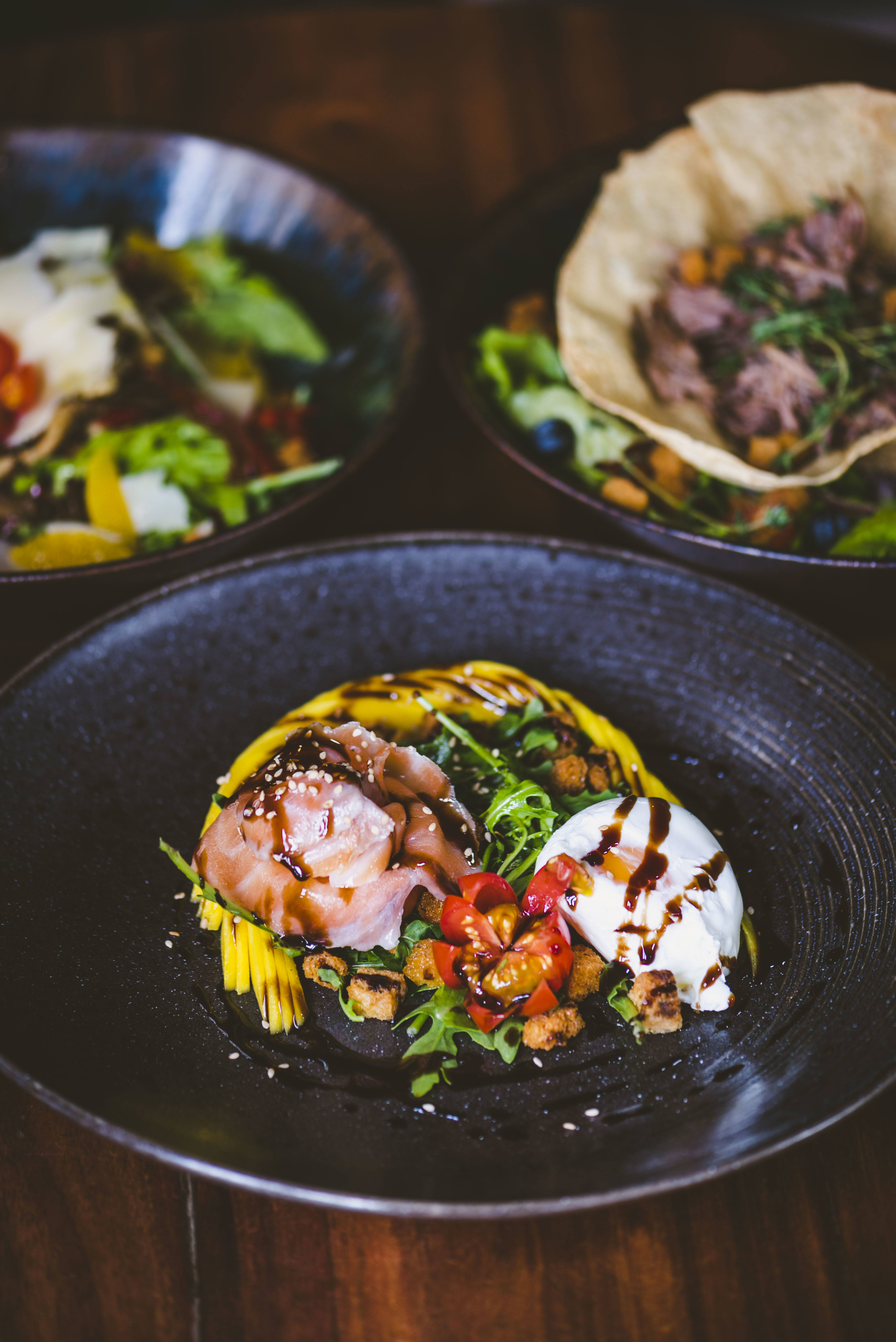
Photo logging looks like the easy winner. Point, snap, done, no typing. But a camera only reads the surface of a plate, and most real food hides its calories under sauce, inside a mix, or in oil you cannot see. Describing the meal out loud lets you tell the app the things a lens will never catch.
Both are trying to solve the same annoyance: logging food without a database search and a food scale. They just come at it from opposite directions. One reads your plate. One listens to you. Here is how that plays out.
How accurate is logging food from a photo?
Photo logging is genuinely good at one thing: recognizable, separated, single foods. An apple. A plain chicken breast. A hard-boiled egg on a white plate. The model has seen a million of those, the shape is clear, and the estimate lands close.
Then real dinner shows up and the cracks appear.
A camera cannot see fat. The single biggest calorie variable in home and restaurant cooking is added oil and butter, and it is invisible by the time the food reaches your plate. A stir-fry cooked in a tablespoon of oil and one cooked in four tablespoons look identical in a photo and differ by two hundred calories. The lens has no idea.
A camera cannot see under things. Cheese, sauce, dressing, a top layer of rice: whatever sits on top hides whatever sits below. A casserole is a photo of a casserole. The model is guessing at the whole lower half.
And a camera cannot judge size without a reference. Is that a small bowl held close or a big bowl across the table? Portion is half the calorie math, and depth and scale are exactly what a flat image throws away. This is not a knock on any particular app. It is a limit of the input. You cannot estimate what you cannot see.
Why is voice logging often more accurate for real meals?
Because you get to say the quiet parts out loud. When you describe a meal, you supply the exact information a photo drops.
You state the cooking method. “Pan-fried in butter” versus “grilled dry” is a fact the app now has instead of a coin flip. You name the hidden ingredients. “Curry with coconut milk” tells it about the fat a brown bowl never would. You give the real portion. “About a cup and a half of pasta” beats the lens squinting at perspective and depth.
The point is control. A photo makes the app do all the recognizing and hope it is right. Voice lets you hand over the detail that moves the number, so the estimate starts from what the food actually was instead of what it looked like from above. That is the core of voice-first macro tracking: you are the sensor the camera cannot be. On common meals described with a little care, the app lands within roughly ten percent, which is the range where the number is useful for hitting protein and staying in your calorie band.
It is also faster than it sounds. “Two eggs, toast with butter, and a flat white” is a five-second sentence. Framing the shot, retaking it because the light was bad, and correcting what the model misread is not obviously quicker.
Does either method replace a food scale?
No, and any app that implies otherwise is selling you something. Both voice and photo are estimates, and estimates from self-report drift in a predictable direction.
The research on this is old and consistent. When people report their own intake and it gets checked against a precise measure, reported numbers tend to run low, and the gap grows as portions grow. The classic review of self-reported energy intake (Schoeller) found people systematically underestimate what they eat, in part because we report toward what we think we should have eaten rather than what landed on the plate. A camera does not fix that bias, it just automates it. Neither method reads your mind or your oil bottle.
So here is the honest framing. If you want gram-perfect data for a cut where every hundred calories counts, weigh your food. Nothing beats a scale for that, and the app never pretends to. But most days are not that. Most days you want a close-enough number, logged in seconds, that keeps you honest about protein and roughly on track for the week. That is the job both voice and photo are built for, and it is a real job. The mistake is expecting either one to be a scale.
Which should you actually use?
Use the one you will keep using, and lean toward the method that captures the detail that matters. For simple visible foods, a photo is fine and pleasant. For actual meals with sauce, oil, mixing, and real portions, describing it wins, because you can tell the app the things the lens loses.
In practice the deciding factor is not accuracy on paper. It is whether the method survives a normal week. The plate you photograph at home is easy. The shared plate at a restaurant, the handful of trail mix in the car, the yogurt you already ate: none of those are camera moments, but all of them are one sentence. A tool you can use with your hands full and your mouth still chewing is the one that logs the meals you would otherwise skip. If you are weighing this against the big-database apps, our comparison with MyFitnessPal and the FAQ go deeper on how the estimate is built.
The best food log is the one you actually fill in. Voice wins most weeks because talking is the thing you will still do on the day you cannot be bothered.
Download TrakMac
Say what you ate, hidden oil and all, and let TrakMac estimate the macros. No database search, no photo retakes, no scale required for the meals that do not need one.
Download TrakMac free. iOS, free to download.