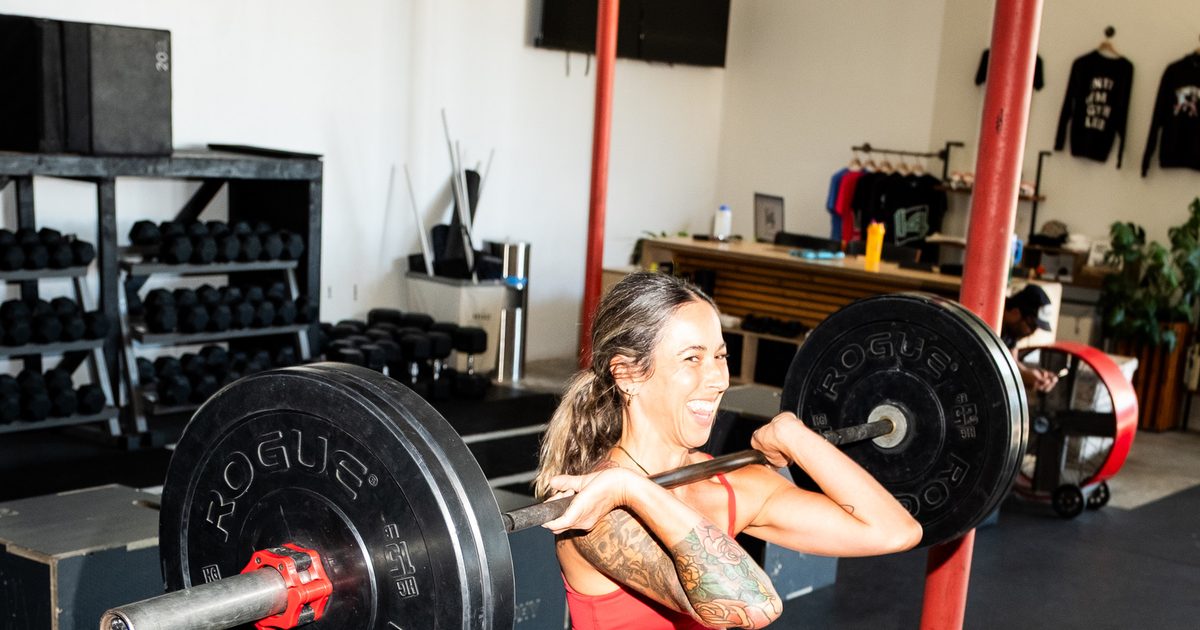
Strength training for women over 40 does not require an hour a day, a coach on retainer, or any prior barbell experience. It requires two or three sessions a week, a handful of movement patterns, and weights heavy enough to mean it. That is the whole entry fee, and it buys you the single most useful physical adaptation available at this stage: muscle you keep, strength you use, and bone that stays loaded.
If you are already active, running, hiking, group classes, this is not a replacement for what you love. It is the missing piece. Cardio maintains the engine. Strength training maintains the frame.
Two to three sessions a week is genuinely enough
Not a compromise for busy people. Enough. Research consistently shows that beginners make excellent strength and muscle gains on two or three full-body sessions a week, and the difference between three sessions and five is small compared to the difference between three and zero. Recovery is where the adaptation happens, and after 40 recovery deserves the extra day anyway.
Forty-five minutes, twice a week, done for six months, will change how you carry groceries, luggage, and grandchildren. Strength training for women over 40 succeeds or fails on showing up, and a two-session floor is one almost any calendar can absorb.
The five patterns that cover everything
Beginner strength training for women over 40 comes down to five movement patterns, not fifty exercises:
- Squat: sit down and stand up. Goblet squat, leg press, box squat.
- Hinge: pick a thing up off the floor. Deadlift variations, hip thrusts, kettlebell deadlift.
- Push: move a weight away from you. Push-ups, dumbbell press, machine chest press.
- Pull: move a weight toward you. Rows, lat pulldown, assisted pull-ups.
- Carry: hold something heavy and walk. Farmer carries with dumbbells.
Pick one exercise from each pattern, do two or three sets of eight to twelve reps, and you have a complete session. Rotate exercises when you get bored, keep the patterns forever.
How heavy? The last two reps should feel hard
This is the part most women under-do, and it is where the results live. The weight is right when the last two reps of a set feel genuinely hard: slower, requiring focus, but with your form still intact. If you could carry on a conversation through the entire set, the weight is a rehearsal, not a stimulus.
You do not need to grind to failure or make noises. You need honest effort, and then a little more weight or another rep next time. That gradual “next time, slightly more” is the entire engine of a strength training program for women over 40. Progression, not punishment.
Machines are a fine place to start
Ignore anyone who sniffs at machines. A machine guides the bar path for you, which means you can safely push hard on day one while your coordination catches up. Leg press, chest press, seated row, lat pulldown: a complete, legitimate program. Graduate to dumbbells and barbells when curiosity strikes, not because someone shamed you off the leg press.
Protein is the other half of the program
Training tells your muscle to rebuild. Protein is what it rebuilds with, and this matters more after 40, when muscle responds less to small doses. Target roughly 0.7 to 1 gram per pound of bodyweight per day. For most women, that is a lot more than they are currently eating, and it will not happen by accident.
It also will not happen if tracking is a chore. This is where TrakMac fits: you say what you ate out loud, “two eggs, Greek yogurt with berries, handful of almonds,” and the protein is counted in seconds. Built by a husband-and-wife team who believe the protein target matters as much as the training, and that logging it should take ten seconds, not ten minutes.
What week one feels like vs month three
Week one: awkward. You will feel like everyone is watching. Nobody is. Weights feel arbitrary, soreness shows up in muscles you forgot you had, and sessions take longer than they will ever take again.
Month three: routine. You know your numbers, warm-ups take five minutes, and the weight that humbled you in week one is now your warm-up set. Stairs feel different. Suitcases go into overhead bins without negotiation. That is usually the moment it stops being a program and becomes a habit.
A quick note: this is training guidance, not medical advice. If you have specific health conditions or injuries, clear your plan with your doctor or a registered dietitian first.
Start this week
Two sessions, five patterns, last two reps hard, protein tracked. TrakMac handles the tracking part on iOS: say what you ate, confirm, done. Download TrakMac free.